CVE-2023-7048: CSRF to Contact Lead Export in My Sticky Bar
A My Sticky Bar CSRF issue that could trigger contact lead CSV export from an administrator's browser.
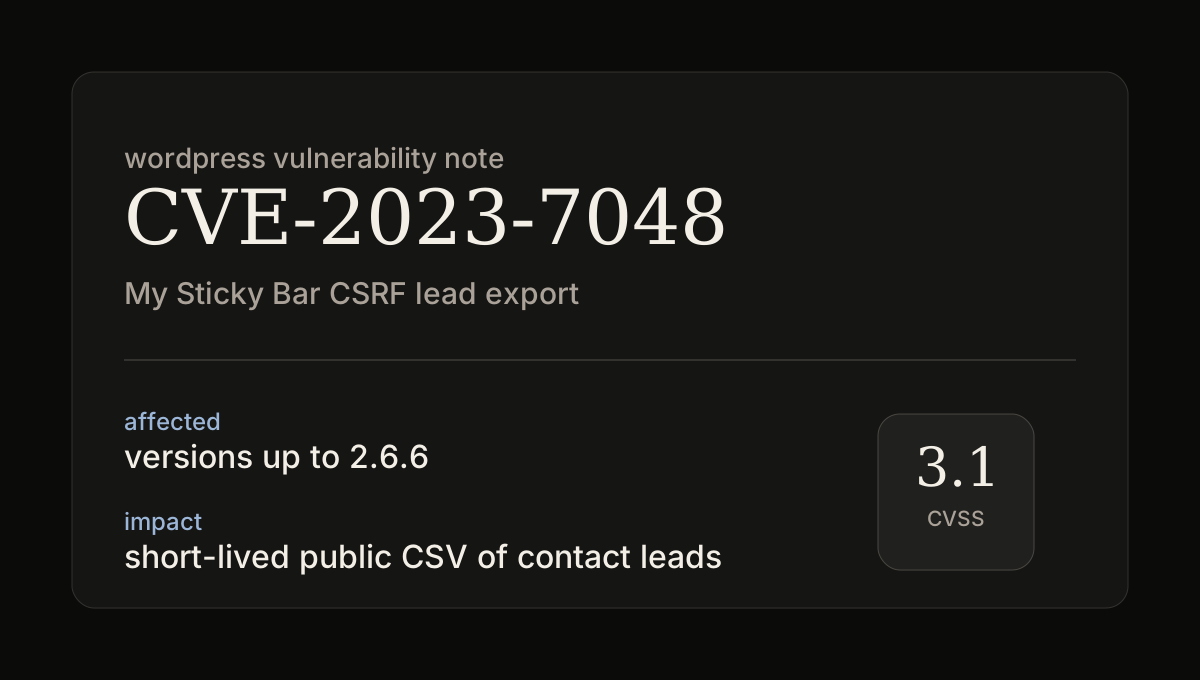
CVE-2023-7048 is a cross-site request forgery issue in the My Sticky Bar WordPress plugin.
The public advisory says versions up to and including 2.6.6 were vulnerable because of missing or incorrect nonce validation in mystickymenu-contact-leads.php. A forged request could trigger contact lead CSV export if an attacker convinced a site administrator to perform an action such as clicking a link.
The bug
CSRF bugs are easy to underestimate because they do not usually look dramatic in isolation. The issue is not that the attacker has direct access to the admin action. The issue is that the browser of an authenticated administrator can be pushed into making the request.
In this case, the action could export contact leads to a CSV file. Wordfence notes that the CSV was written to a public location for a short window before the export function automatically deleted it.
Fix
My Sticky Bar patched the issue in version 2.6.7. Site owners should update to 2.6.7 or newer.